
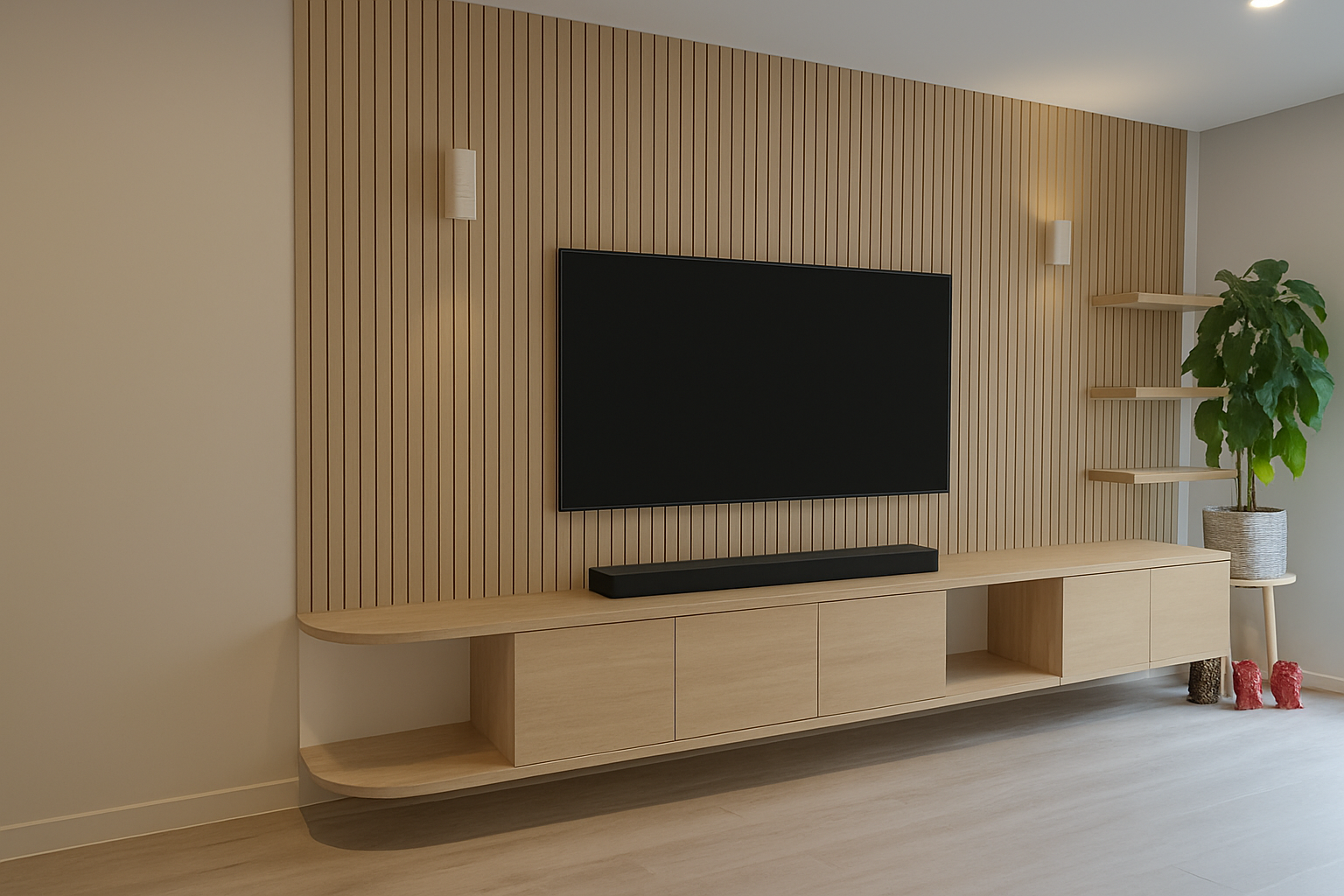
At CM Furniture Design, we often get asked by clients if we can make their custom furniture in solid timber. The answer is yes — solid wood has a timeless appeal, however, in modern joinery, timber veneer and laminate finishes have become the smarter, more sustainable, and far more cost-effective choice. Here’s why, along with a few premium alternatives that deliver the warmth and texture of timber at a more affordable cost.
1. Why Solid Timber Is So Expensive
Solid timber furniture requires large, high-grade sections of natural wood, often sourced from slow-growing species like American Oak or Walnut. These timbers are not only rare but also expensive to mill, season, and store.
Every solid board must be planed, joined, and stabilised — and even then, timber continues to expand and contract with humidity. That means extra time, more waste, and more complex construction methods to prevent warping or splitting.
Add to that the rising cost of responsibly sourced timber and Australian manufacturing labour, and it’s easy to see why solid timber can cost two to three times more than a high-quality veneer or laminate alternative.
2. The Modern Alternative: Timber Veneer
Timber veneer offers the warmth and authenticity of real wood without the cost or environmental impact. Thin slices of real timber are bonded to stable substrates like MDF or plywood, creating panels that look identical to solid wood — but with far greater stability and efficiency.
Because veneer uses only a fraction of the timber, it’s a sustainable choice that still delivers genuine texture and grain variation.
At CM Furniture Design, we often combine veneer with solid edging for a seamless, natural finish — giving you the aesthetic of solid timber without the structural challenges or cost.
3. Laminates With a Real Wood Look and Feel
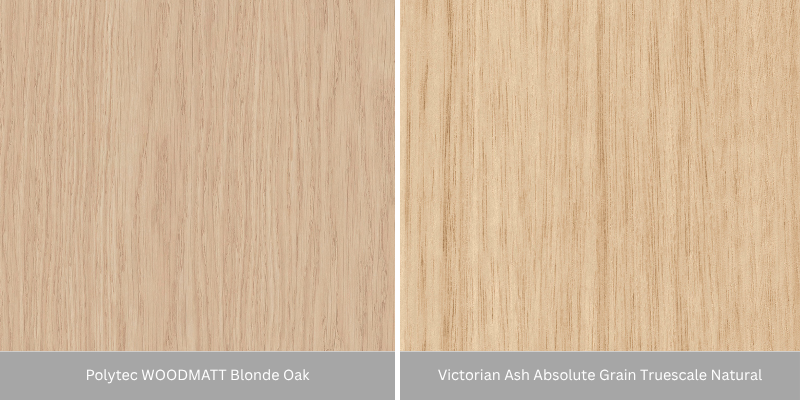
Polytec WOODMATT and Laminex AbsoluteGrain are two premium timber-look laminate finishes designed to replicate the warmth and texture of real timber, without the maintenance. This innovative laminate technology combines 3D texture, matte finishes, and woodgrain printing that perfectly mimics the look and feel of real timber — even under touch and light. Unlike natural wood, it’s scratch-resistant, moisture-proof, and easy to clean, making it ideal for high-use areas like bookcases, media units, kitchens, offices, and wardrobes. And because it’s a laminate, it’s significantly more affordable to manufacture furniture from — often half the cost of real timber or veneer, without sacrificing style.
4. Why Solid Timber Is Rarely Used These Days
In today’s design industry, even luxury joinery projects rarely use solid timber for full constructions.
Most high-end furniture combines veneers, laminates, and solid trims strategically — using each where it performs best.
This approach delivers:
- Greater stability and longevity
- A more consistent finish
- Less environmental waste
- A significantly better price point
You still get the premium aesthetic, but with smarter engineering behind it.
5. Choosing the Right Finish for Your Space
When designing with clients, we look at the balance between appearance, performance, and cost.
- For statement pieces or feature panels — timber veneer adds warmth and authenticity.
- For durability and daily use — laminates like Laminex AbsoluteGrain provide style and practicality at an accessible price.
It’s all about choosing the right material for the right purpose.
Final Thoughts
Solid timber will always hold a place in furniture making — but in most cases, veneers and laminates deliver the same aesthetic for a fraction of the cost and environmental impact.
Modern laminates like Laminex AbsoluteGrain and Polytec WOODMATT have blurred the line between imitation and authenticity, giving you the look, feel, and texture of natural wood — without the price tag.
Please reach out to discuss your custom project.