

With AI tools becoming more popular, it’s tempting to think you can get top-tier furniture visualisations with a few clicks. But when it comes to high-quality, reliable, and realistic rendering—there’s a clear difference between AI-generated visuals and what we offer through professional 3D rendering.
1. Realism vs. Guesswork
AI Visualisations:
AI tools are fast and accessible, but they rely heavily on patterns learned from existing data. This means furniture placement, lighting, and proportions are often approximations. Sometimes, the furniture might float, the shadows may be off, or the style doesn’t match the actual space.
Our Renders:
We design every image with accuracy in mind. Furniture is placed to scale, lighting is rendered naturally, and every texture—from wood grains to fabric detail—is intentionally crafted. The result? Photorealistic imagery that mirrors real-world expectations.
2. Control Over Design
AI Visualisations:
A key shortfall of using AI renders for furniture previsualisation is the lack of precise control when making small design changes. Unlike traditional CAD or hand-drawn concepts, AI-generated images are not predictable—altering a simple detail in the prompt often results in the entire design shifting or unexpected elements appearing. Instead of adjusting just the handle style, leg shape, or overall proportions, the AI may reinterpret the whole piece, making it difficult to refine or iterate on a concept. This unpredictability means AI renders are great for broad inspiration but unreliable for accurate, incremental design development.
Our Renders:
In contrast, professional renders created by our team are accurate, measurable, and directly tied to real-world manufacturing, ensuring the final product is exactly what you expect. Every component—dimensions, materials, joinery details, and structural elements—is modelled to industry standards, meaning the design can be built precisely as shown. These renders aren’t just visual concepts; they are production-ready representations that guarantee functionality, practicality, and fit for purpose. Unlike AI-generated images, which often include impossible construction details or unrealistic proportions, our renders translate seamlessly into cabinetry and furniture that can actually be made, installed, and enjoyed for years to come.
3. Consistency Across Projects
AI Visualisations:
Because AI generates each image independently, maintaining a consistent design language across a project (or multiple projects) can be a challenge.
Our Renders:
When it comes to custom furniture, our renders maintain complete consistency and accuracy across every stage of the design process. Because we work from detailed, editable models rather than unpredictable AI outputs, each revision is precise—whether you’re adjusting dimensions, materials, hardware, or joinery details. This ensures a cohesive design language across all pieces in a home or project, perfectly aligned with your style and requirements. Our designs are truly iterative, evolving accurately with each change so the final product matches your vision and can be manufactured exactly as rendered.
4. Real People, Real Collaboration
AI Visualisations:
AI tools are automated. They don’t ask questions, offer advice, or suggest better layouts. You’re left doing most of the creative decision-making alone.
Our Renders:
When you’re designing custom furniture, real collaboration makes all the difference. Our team of designers and render specialists work closely with you—asking the right questions, suggesting smarter layouts, refining proportions, and offering material or construction advice that AI simply can’t provide. Instead of leaving you to interpret vague or inaccurate AI visuals, we guide the entire process to ensure every render is not only visually impressive but also functional, manufacturable, and perfectly aligned with how you want your furniture to look and perform in the real world. We guide the process to make sure the final image isn’t just beautiful—but effective.
Example of AI render compared to our render
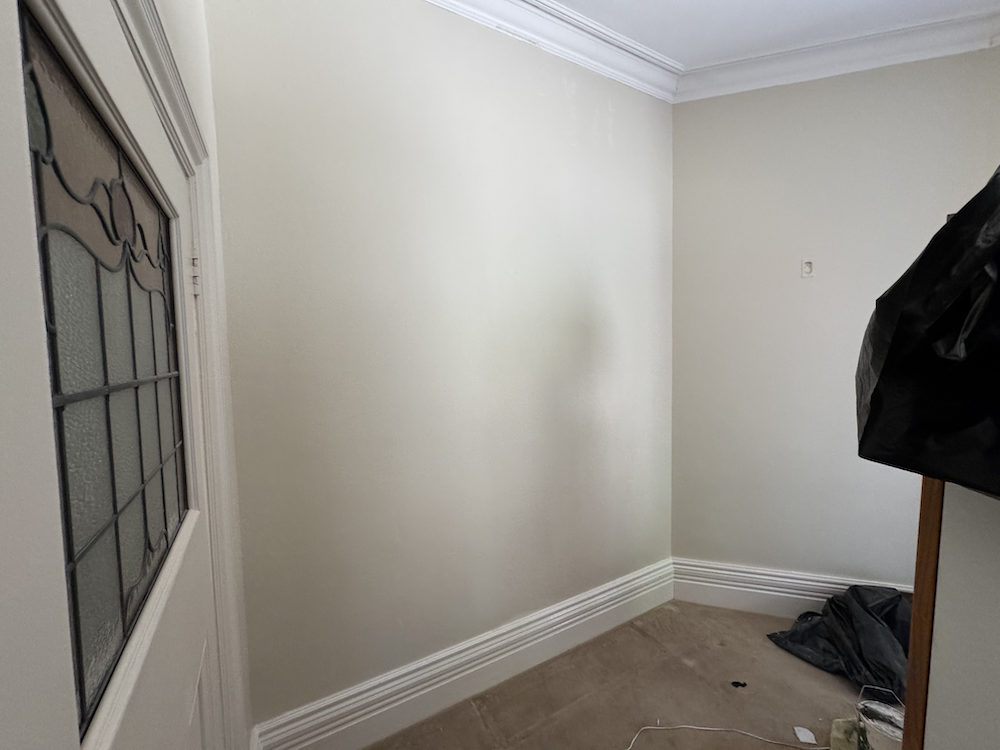
Original photo taken onsite
The original site photo was uploaded to ChatGPT, and a bookcase was rendered into the space based on the requested design.
This was the first image generated by ChatGPT
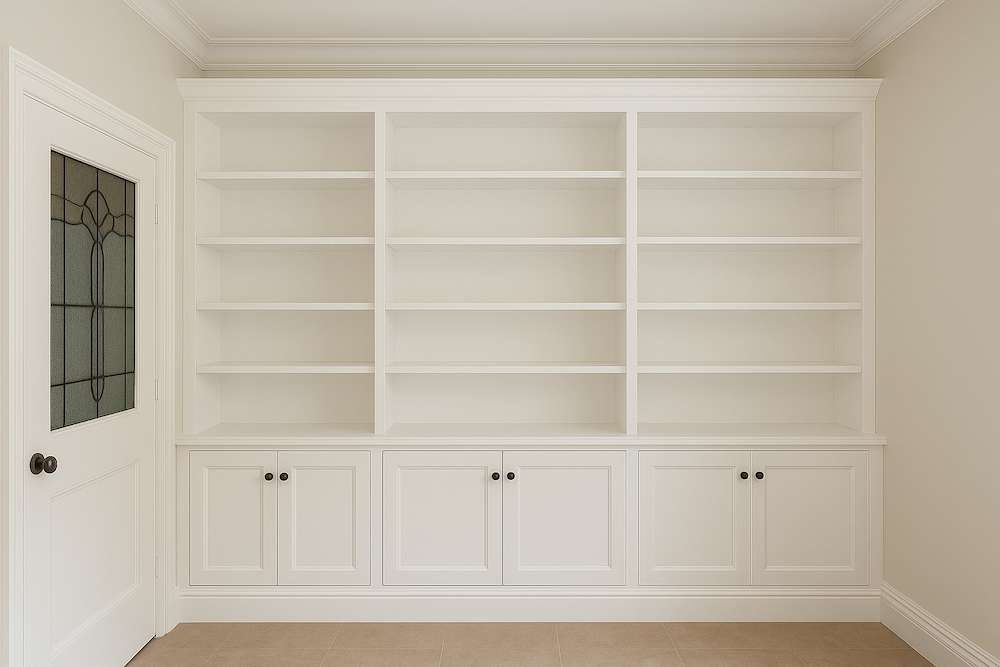
After asking it to keep the original room’s style and shape while adding fluting to the vertical panels, I received this updated rendered result.

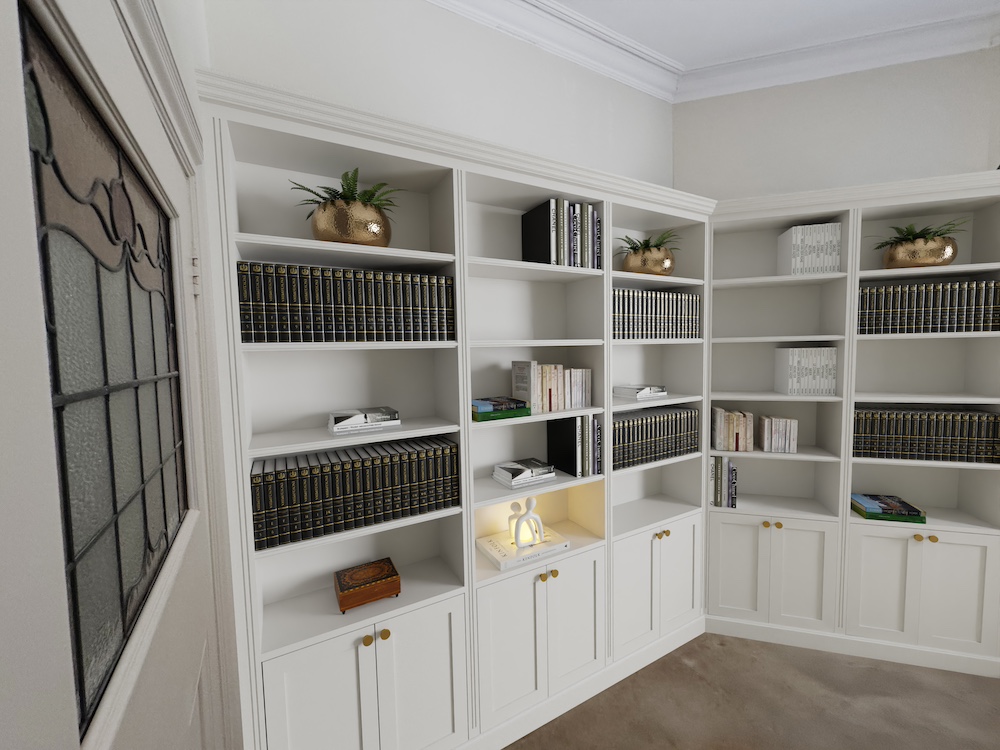
CM Furniture Design Professional Render
Our render is shown within the room exactly as it is, without altering the shape or size of the space. The bookcase design accurately reflects the client brief and our design inspiration, and can be built precisely as rendered.
Creating a render that is truly accurate in colour, scale, and lighting takes significant time, as it requires carefully setting up materials with correct colour profiles, calibrating realistic light sources and shadows, matching camera angles and lens settings to the site photo, and building detailed 3D geometry that reflects the exact proportions of the room.
High Level Comparison
| Feature | AI Visualisations | Our Professional Renders |
|---|---|---|
| Realism | Often inconsistent | Photorealistic |
| Control | Limited | Fully customisable |
| Consistency | Hard to maintain | Guaranteed across all renders |
| Usability | May require editing | Ready to use |
| Support | No human input | Full client support |
Final Thoughts
AI visualisation is a fun, fast tool—but when it comes to showcasing custom-made furniture, nothing replaces the attention to detail and reliability of professional, industry-grade rendering. Skilled renderers can accurately capture timber textures, proportions, joinery, and the unique character of bespoke designs in a way AI tools simply can’t replicate. The result is a true-to-life visual that elevates your concept, communicates craftsmanship, and gives you confidence in the final product.