
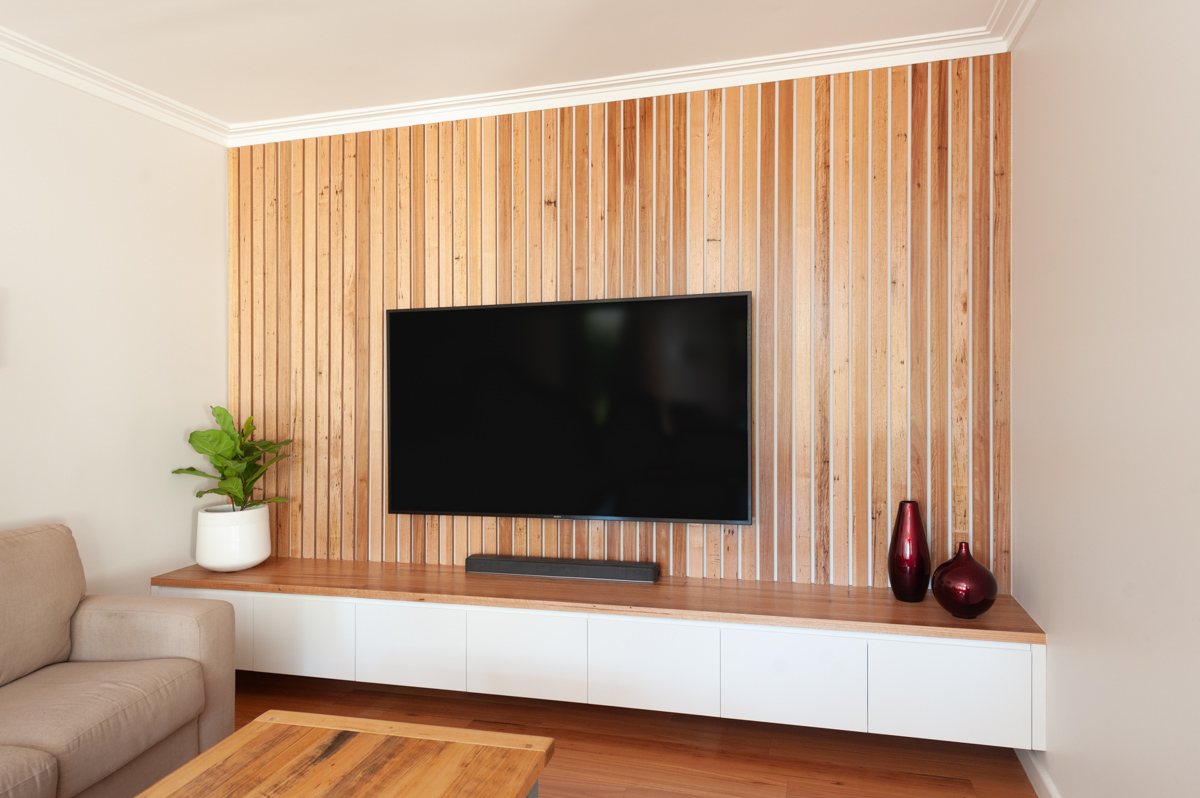
Entertainment wall units serve as both a functional centrepiece and a design statement in living rooms, media rooms, or lounges. Here are practical tips to help you create a well-designed entertainment wall unit.
Plan Ahead
Measure Carefully: Before discussing any ideas, measure the entire wall height, width, and depth available. Take note of ceiling height variations (e.g., bulkheads), cornices and architrave details. Additionally note any powerpoints or other implications that may need to be built around or accounted for.
Define Functionality: List out everything you need the unit to accommodate—TV size, audio/video components (receivers, consoles, set-top boxes), speakers, gaming systems, and cable boxes. Also consider non-electronic items: books, DVDs, décor objects, or children’s games.
Future-Proofing: Plan wiring and shelving with flexibility in mind. Today’s TV might be 60″, but years from now you may want a larger screen. Leave space above and around the TV opening for ventilation and easier swapping of electronics.
Consider Ventilation and Cable Management
Ventilation Paths: Electronics generate heat. If components are enclosed behind doors or drawers, include ventilation gaps (e.g., slotted panels or louvered doors) at the back or sides. This prevents overheating and prolongs component lifespan.
Concealed Wiring: Ensure to allow cable holes or a cavity behind shelves to run power cords, HDMI cables, and speaker wires.
Accessible Power Strips: Recess a power strip onto a dedicated shelf, ideally on the bottom section. This keeps surge protectors hidden yet accessible for future changes—no more unplugging the entire wall unit to add a new device.
Balance Open Shelving with Concealed Storage
Open Display Zones: Use open shelves, mesh or glass-front cabinets for devices you use frequently (e.g., streaming devices). If you have a soundbar, leave a low-profile shelf space directly below the TV opening so it’s out of the way but still audible.
Closed Storage: Incorporate cupboards or drawers for items you want out of sight— remote controls, board games, or pet toys. Full-height doors can hide components behind a single façade to maintain a streamlined look.
Frame the TV Opening Thoughtfully
Proportions Matter: If the TV is wall-mounted, the opening should align with typical viewing heights—approximately eye level when seated.
Floating vs. Built-In: Decide whether the TV will be simply set on a shelf, floating in front of the back panel, or recessed into a niche. A recessed TV opening can be striking but requires deeper wall construction and careful TV ventilation.
Trim and Moulding: A minimal trim can create a “picture frame” effect around the TV opening, giving it a gallery-like appearance. Alternately, use a wide floating shelf below the TV (no visible supports) to act as both a mantel and a base.
Choose Materials and Finishes to Complement Your Room
Timber Selection
Victorian Ash/Tasmanian Oak: A classic Australian hardwood that stains well and has a neutral, light-to-medium tone. Ideal if you want a warm, consistent look.
American Oak or Walnut: Imported options with distinctive grains and richer coloration. Pair them with natural oils or matte finishes to showcase the wood’s character.
Melamine or Veneer: Cost-effective alternatives that mimic solid timber. Available in a range of woodgrains, colors, and textures—good for modern or minimalist styles.
Finish Styles
Matte or Satin: Offers a subdued sheen and hides fingerprints better than high-gloss.
Natural Oil or Wax: Accentuates the texture and grain of timber. Great for a more organic or rustic aesthetic.
2 pack: Crisp white or charcoal cabinetry can create contrast against timber accents. In a media-heavy space, darker hues help the unit recede when the TV is off.
Incorporate Lighting for Ambience and Functionality
LED Strip Lighting: Strip lights concealed along the underside of shelves softly illuminate collectibles or media components. Choose warm-white strips for a cozy vibe.
Feature Lighting: Recessed lights in the top (if you build up to the ceiling) can highlight the upper shelves.
Backlighting the TV: Installing an LED strip behind the TV opening reduces eye strain while watching and creates a subtle floating effect. It also adds depth to the overall design when the TV is off.
Integrate Audio and Acoustics
Speaker Placement: If you’re installing built-in speakers or a soundbar, leave unobstructed openings or speaker grilles in the design. Ensure there is enough depth behind to accommodate rear-firing drivers.
Subwoofer Storage: If you have a floor-standing subwoofer, they need airflow and space for bass waves to resonate—don’t enclose them.
Personalise with Decorative Details
Asymmetrical Shelving: Break away from a strictly symmetrical grid to introduce movement. Offset vertical dividers or create a stepped-shelf effect to display artful objects and books dynamically.
Textural Contrasts: Pair smooth painted cabinets with edged timber shelves. Alternatively, integrate a panel of decorative veneer—such as American oak—for visual interest.
Hardware Choices: Inset pulls keep a clean face, while brushed brass or matte black handles can read as jewellery on an otherwise large expanse. Concealed hardware is ideal if you want an ultra-minimalist, handle-free look.
Maintain Flexibility for Future Changes
Adjustable Shelves: Use steel shelf standards so shelf heights can be easily reconfigured when you swap out components or add taller items.
Modular Units: Build the unit in sections (e.g., left storage tower, central TV bay, right display shelving) so each can be accessed independently. This also simplifies moving or upgrading parts over time.
Plan for Installation and Integration
Wall Anchoring: Ensure the unit is properly anchored to studs to make sure it is safe.
Behind-the-Wall Wiring: If possible, run power and AV cables through the stud cavity so cables never show. Plan power outlet locations inside the unit early, before drywalling.
Professional Collaboration: If you’re looking at a custom made entertainment unit, share your equipment list and a rough diagram of component sizes. This collaboration ensures the finished unit fits precisely around your electronics and décor.
By carefully measuring your space, prioritising ventilation and cable management, selecting materials that suit your aesthetic, and incorporating lighting and acoustic considerations, you can create a unit that looks stunning. Remember: flexibility is key—plan for future tech upgrades and evolving trends so your entertainment wall remains timeless and adaptable. With these tips in mind, you’ll be well on your way to creating a custom piece that not only anchors your room but also enhances your daily living experience.